“The beautiful thing about learning is nobody can take it
away from you.” — B.B. King
“KNOWLEDGE IS A SWORD THAT NEVER RUSTS”
― P.S. Jagadeesh Kumar
THE PROBLEM
Every year, thousands of Kentuckians leave incarceration with no
understanding of how their government works, how their rights can be
restored, or how to become active, engaged citizens. For people who have
lost their right to vote as the result of a felony conviction — this gap isn't
just an inconvenience. It's a barrier to full reintegration into community life
and, thus, to a sense of belonging.
ORIGIN and PURPOSE
He carries two felony convictions. He has served terms of incarceration.
He conquered nearly 30 years of addiction. And, before his life unspooled,
he worked for some of the most prominent public figures of his day. He will
tell you that his personal story is neither unique, nor – according to some
people’s standards – that emotionally compelling.
Civics Alive Kentucky’s founder and director Tip Moody is the man
described above. For 15 years, her worked in political and nonprofit
fundraising in the nation’s capital. These jobs focused on raising get-out-
the-vote money for candidates, and funding resources for organizations to
promote their cause and to engage the public. Ultimately, his addiction led
to the loss of his career, a felony conviction, and the stripping away of his
right to vote. After Governor Beshear’s 2019 executive order restored his
voting rights, Tip became an advocate working actively to end lifetime
felony disenfranchisement in Kentucky by amending the commonwealth’s
constitution.
Through that advocacy — speaking to recovery groups, civic organizations,
and formerly incarcerated populations— Tip saw firsthand the deficit in
civics understanding among all these various groups. He writes:
“During my term of incarceration, and through my years of speaking with persons
who have felony convictions, those who are formerly incarcerated – and the
general public -- about restoring their voting rights, I have become aware of how
few people have had the opportunity to learn about civics—how government
works, how politics extends beyond elections and laws, how civics affects our
everyday lives, and how each of us can participate in the democratic process,
even when we cannot vote.”
THAT REALIZATION BECAME THE FOUNDING PURPOSE OF CIVICS
ALIVE KENTUCKY.
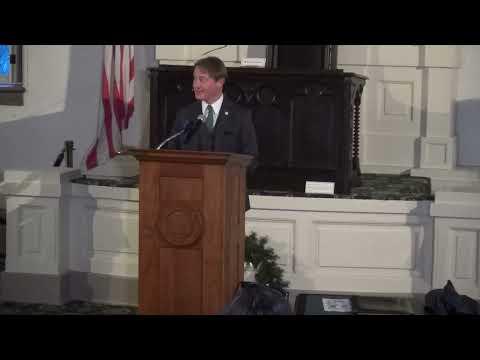
“A Conversation on Kentucky’s Civic Health”
Kentucky Secretary of State Michael Adams
Kentucky Historical Society, November 21, 2024
Cuts at 5:50 – 6:25, 6:37 – 6:50, 15:46 – 16:09
SELF-DETERMINATION & PERSONAL AGENCY
A felony conviction and a term of incarceration change a person. Such
changes may be subtle and well-guarded for some. The changes may be
more public for others. The personal impact can last a lifetime.
Every person with a criminal history and experience of incarceration has a
story. Addiction, dysfunctional families, emotional scars, poverty, trauma,
and other circumstances may have led them down a path that ended in
incarceration. For many, these experiences have also diminished their
sense of belonging, self-determination, and belief that they can make a
difference in their communities and in the world around them.
Learning how to become actively engaged in the political process—at any
level or capacity — can help rebuild a sense of connection and personal
agency. Understanding the importance of voting when that right is restored
is another.
Civics education and community involvement post-release can often be
overlooked as key components in social reintegration.
Civics Alive Kentucky seeks to change that, even if only in a small -- but
meaningful -- way.
77
The number of county and regional jails in Kentucky
19,915
2025 average monthly total of detainees
14,1691
Individuals release from custody since 2023, based on a 24-month review
Kentucky Department of Corrections 2025 Annual Report