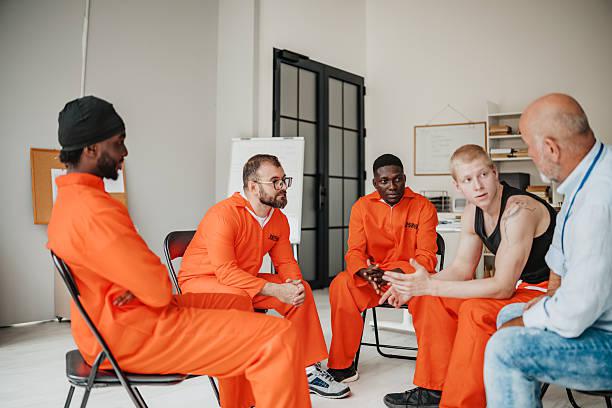
Civics Alive Kentucky delivers structured instruction in American history, government, and voting rights to incarcerated Kentuckians, most of whom are preparing for release. Classes are designed to make these ideas understandable, relatable, and engaging. Additionally, each class seeks to make civics practical and accessible, rather than distant or abstract.
“People like it when they understand something that they previously thought they couldn’t understand. It’s a sense of empowerment.” Neil deGrasse Tyson
THE SPEAKERS are accomplished educators, academicians, authors, public figures, attorneys, and community activists who bring a depth and breadth of knowledge from decades of combined experience. Their range of expertise and personality bring a warm friendliness to the program participants. This openness naturally invites the men to engage and learn more easily.
THE CURRICULUM delivers structured instruction separated into four subject area modules. Each module builds on the one preceding it so that the classes flow in an easily followed manner. The program is bookended with an appropriate introduction to the different definitions of “politics,” and a conclusory conversation with participants offering their overall opinions.

"The beautiful thing about learning is that no one can take it away from you."
B.B. King
"Learning is a treasure that will follow its owner everywhere."
Chinese Proverb
"A person's mind, once stretched by a new idea, never regains it's original dimensions."
Oliver Wendell Holmes
"Never doubt that a small group of thoughtful, commited citizens can change the world; indeed, it's the only thing that ever has."
Margaret Mead
"Liberty cannot be preserved without general knowledge among the people."
John Adams
WEEK 1
The Politics of Everyday Life
What is “politics?”
What are the essential elements of politics?
How does politics help create good communities?
How does politics impact everyday life?
WEEK 2
Colonial America
The colonies' increased economic independence and presence in global trade.;
Actions the British Parliament took to exploit the colonies economically and politically;
Colonists’ growing anger at their interests not being represented in Parliament;
Violent events that precipitated the American Revolution.
WEEK 3
The Many Faces of Community Engagement
What does community “engagement” really mean?
“My vote and opinion really don’t matter.”
How can a person be an important part of the democratic process even if they are unable to vote?
WEEK 4
Constitutional History – the Albatross of Slavery
Who wrote the constitution?
What was the process of drafting our founding document?
What outsized role did slavery play in the creation and ratification of the U. S. Constitution?
WEEK 5
Constitutional History – Foundations of Religious Freedom
How personal, social, and historic influences shaped the final document;
How religious freedom and the separation of church and state became a central tenet
WEEK 6
The “Threes” of Government – Separation of Powers
What are the three co-equal branches of government?
What are the constitutional powers given to each branch of government?
What does “checks and balances” mean?
WEEK 7
The “Twos” of Government – Federalism
What is the meaning of “federalism”
How do state governments differ in areas of law and authority from the national government?
How do state and federal laws and responsibilities conflict with, and complement, the other?
WEEK 8
History of Voting and Felony Disenfranchisement
Overview of voting rights throughout U.S. history;
Passage of the 15th and 19th amendments, and the civil rights movement;
Origins of citizens login their right to vote due to a felony conviction.
WEEK 9
Felony Disenfranchisement in Kentucky
Its constitutional origin;
Understanding Section 145 of the Kentucky Constitution;
The decades-long effort to amend Section 145 and eliminate lifetime felony disenfranchisement;
How to restore voting rights upon release if eligible.
WEEK 10
Fashion an Idea and Generate Support – Creating “Partnerships”
The meaning of “Learn, Lose, Love” in the political process;
Identifying a worthy policy idea and then recruiting others to support it.
WEEK 11
How a Bill becomes Law in Kentucky
The rules and procedures legislators use to draft, discuss, amend, and pass a bill into law;
What goes on behind the scenes away from public view and knowledge.
WEEK 12
“Grow Where You’re Planted”
A conversation with male guests who also have a criminal history;
Guests are a combination of men who remain disenfranchised and those whose freedom to vote has been restored;
Personal stories of achievement and success.
WEEK 13
Recap and Evaluations